
“Our hit ratio is 95%” can describe a superbly tuned CDN or a disaster, depending on which ratio it is and what you serve. Two definitions, three measurement places, and a short list of silent killers.
Two ratios, two questions
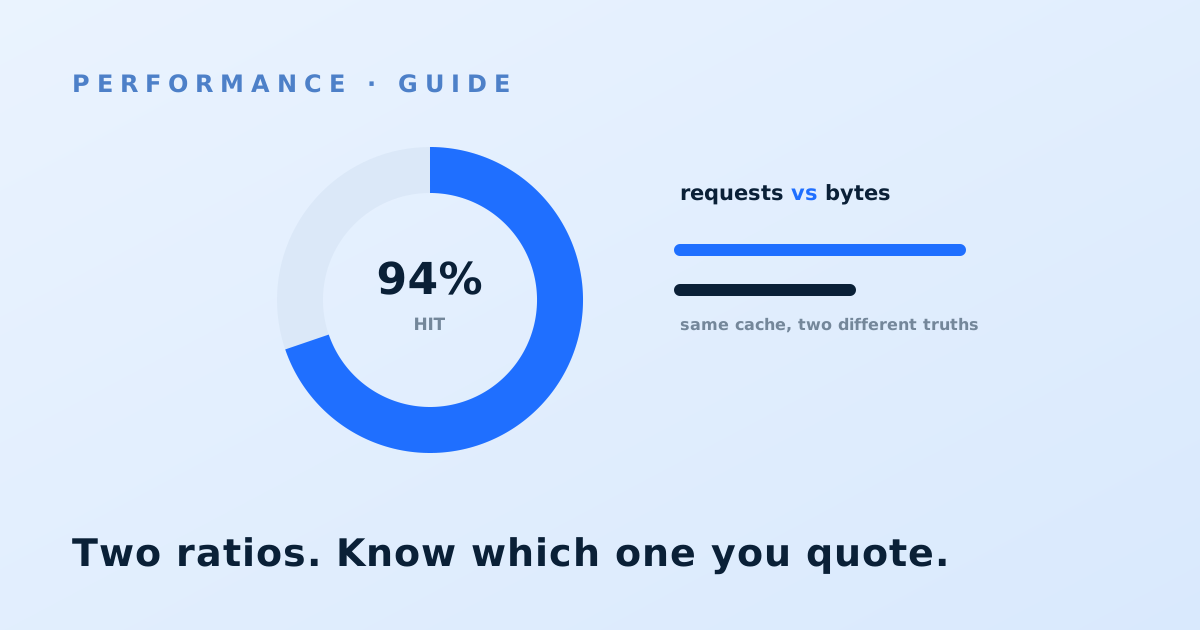
Request hit ratio is the share of requests answered from cache; it tracks user-facing latency, because every miss pays an origin round trip. Byte hit ratio is the share of bytes served from cache; it tracks your origin egress bill. They diverge hard on mixed content: thousands of tiny cached API responses plus a few huge uncached videos yields a 98% request ratio and a 40% byte ratio — fast site, expensive origin.
Decide which problem you are managing before quoting a number, and always label which ratio you mean.
Where to measure
CDN dashboards report edge-wide ratios, which is the number to trend but not always the number users feel — a global 92% can hide a 60% ratio in the one region with a small cache footprint; break it out by region if the provider allows. Response headers (X-Cache, CF-Cache-Status, X-Served-By) tell you the truth per-request and are the debugging tool. Origin request rate is the ratio’s shadow: if origin requests per second rise while traffic is flat, your effective ratio is falling regardless of what the dashboard says.
What healthy looks like
For static assets with versioned filenames, expect a request hit ratio of 97–99.5%; below that, something is wrong, not suboptimal. HTML with short TTLs typically runs 70–90%. Long-tail catalogs (many objects, shallow popularity curve) run lower by nature — 80–90% can be excellent for a million-object image library. Video segments should sit near 99% during any concurrent event; live streaming below that indicates a request-collapsing problem, not a caching problem.
The silent killers
Four faults cause most degraded ratios. Unbounded query strings: a marketing tag like ?fbclid= makes every URL unique — normalize or strip ignored parameters at the edge. Careless Vary headers: Vary: User-Agent fragments one object into thousands of cache entries; vary only on what you actually serve differently. Cookies on static domains: many CDNs bypass cache when requests carry cookies — serve assets from a cookieless hostname or strip at the edge. And Set-Cookie on cacheable responses, which most edges treat as do-not-store.
After fixing any of these, purge and re-measure over a full day; ratios need a traffic cycle to stabilize.
Turning the ratio into money
Every point of byte hit ratio is origin egress you did not buy. The arithmetic: monthly delivered bytes × (1 − byte hit ratio) = origin egress; price that at your cloud’s egress rate and the case for an afternoon of cache tuning usually writes itself. Bring that number to your next renewal — a provider whose defaults cost you cache efficiency is charging you twice.