
Multi-CDN is simultaneously overhyped and underused: pitched to teams who do not need it, avoided by teams who do. The honest guide is mostly about telling those teams apart.
What it actually is
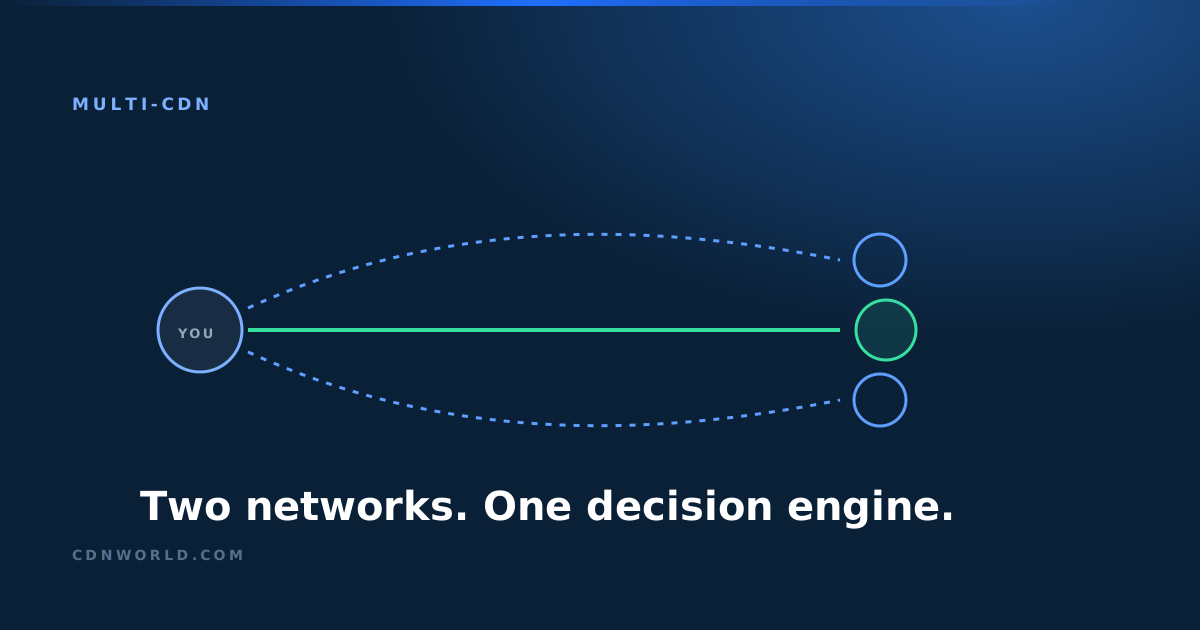
Two or more networks delivering the same content, with a decision layer, usually DNS-based steering, choosing per request based on health, performance and cost. The architecture is simple to draw and demanding to operate well. Telling those teams apart is mostly arithmetic about stakes, which is why the honest guide spends as much time on costs as on capabilities.
What it genuinely buys
Survival of any single provider’s outage as a routing event rather than an incident. Regional performance arbitrage, each geography served by whoever measures best there. And permanent commercial leverage, because a provider who knows you can shift traffic tomorrow negotiates differently forever. The leverage benefit compounds quietly: it applies to every renewal, on both networks, forever, and unlike the resilience benefit it pays out in years when nothing goes wrong.
Team readiness is the unmodeled variable in most multi-CDN decisions. The architecture assumes someone owns steering policy, reads two dashboards, keeps two configurations honest and rehearses failover, and that someone has a day job. Organizations with platform teams absorb this easily; organizations where delivery is one engineer’s side quest should weight the operational line heavily, or buy the management as a service. The failure mode is not dramatic: it is a second network slowly drifting stale until the day it is needed, at which point the insurance policy turns out to have lapsed quietly years earlier.
What it honestly costs
A second contract and minimum, cache hit ratios that fragment across networks, feature parity work where the two platforms differ, and an observability burden that unified dashboards understate. These costs are real and fixed; the benefits scale with your stakes. That asymmetry is the entire decision. The observability line deserves respect: two providers means two log formats, two dashboards and two versions of the truth, and unifying them is real engineering that the pitch deck compresses into one slide.
In practice
Score yourself on three questions with actual numbers: what does an hour of outage cost, what share of revenue sits in regions where your current network is not the measured leader, and what would a standing alternative be worth at your next renewal? Sum the annual value, compare it against a second minimum plus the operational overhead, and the architecture decision becomes a division problem rather than a debate.
Our multi-CDN page holds the full case, and the assessment computes whether your stakes clear the bar.