
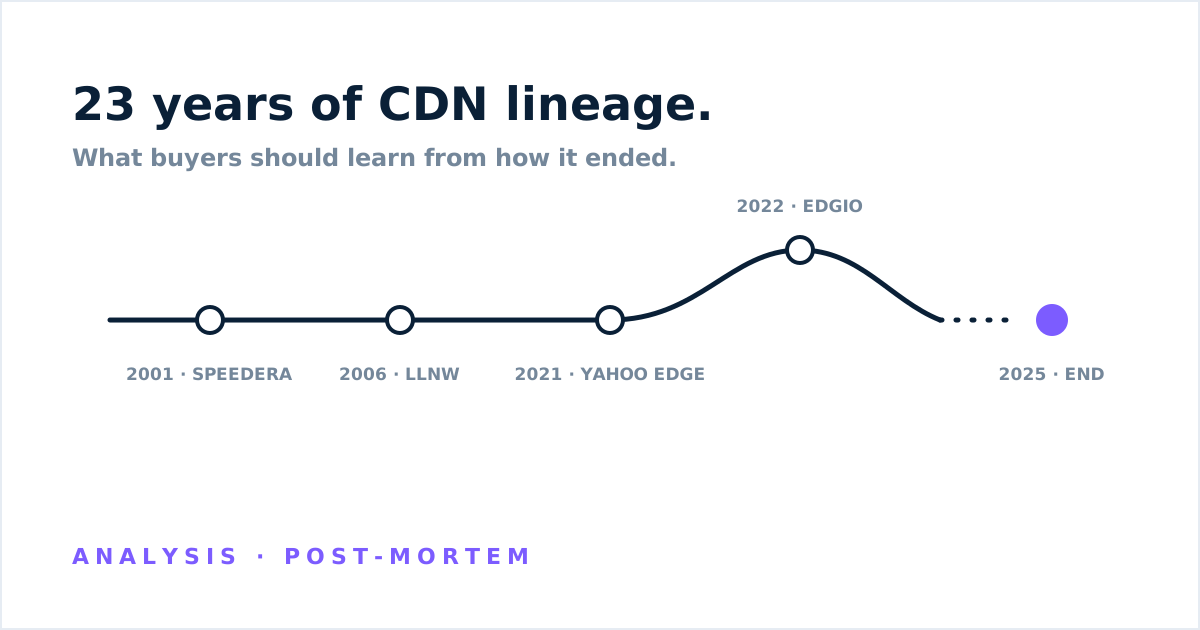
For two decades the family tree ran Limelight, Verizon Digital Media, EdgeCast, merging into Edgio in 2022 as the industry’s consolidation bet. In September 2024 Edgio filed Chapter 11; Akamai bought the customer contracts for $125 million; and on January 15, 2025 the network went dark. This is the rare versus article where one side no longer exists, which is precisely why it earns its place in the series.
What actually happened
The mechanics were brutal and instructive: the bankruptcy auction sold contracts, not the network, Akamai acquired customers and patent licenses while explicitly excluding personnel, technology and infrastructure. Customers, including a large population reaching Edgio through Microsoft’s Azure CDN storefront, received a hard migration deadline measured in weeks. Some moved to Akamai’s prepared path; others scattered across the market mid-quarter, negotiating from exactly the position no procurement team ever wants.
The technical lessons
Every migration pain of that winter traced to the same debts: configurations living only in a dying vendor’s dashboard, purge and rules logic with no portable representation, TLS certificates and DNS cutover plans built for planned change rather than forced exit. The teams that moved calmly were the ones whose delivery configuration existed as code, whose DNS TTLs were already short, and whose architecture had rehearsed provider change even once.
A note for anyone still holding paperwork from the lineage: contracts referencing Edgio, Verizon Media Platform or EdgeCast describe services that ceased operating in January 2025, and successor arrangements landed on Akamai paper with Akamai pricing. If your organization migrated under deadline pressure, the terms you accepted that winter were shaped by urgency and deserve a scheduled re-negotiation now that calm has returned; forced-migration pricing should not quietly become permanent pricing. We have re-benchmarked several such contracts this year, and urgency, it turns out, had a measurable rate.
The market lesson
Consolidation is not a stabilizer; it is a concentrator of failure. A vendor’s balance sheet is part of your infrastructure, and the versus articles across this series now carry that awareness explicitly: viability, ownership and change-of-control terms sit beside latency percentiles in every evaluation we run.
In practice
Audit yourself against the Edgio test today: could you exit your primary CDN in thirty days without heroics? Configuration as code, documented origin architecture, short TTLs on delivery hostnames, an exit clause you have actually read, and ideally a second network already warm. Estates that pass the test negotiate better renewals forever; estates that fail it are one press release from a very bad quarter.
Migrated under the 2025 deadline? Bring the contract. The re-benchmark is exactly the calm the original signing lacked.