
Static caching is easy to understand: keep a copy nearby. Dynamic acceleration, speeding up content that cannot be copied, sounds like magic and is actually three specific tricks.
The three tricks
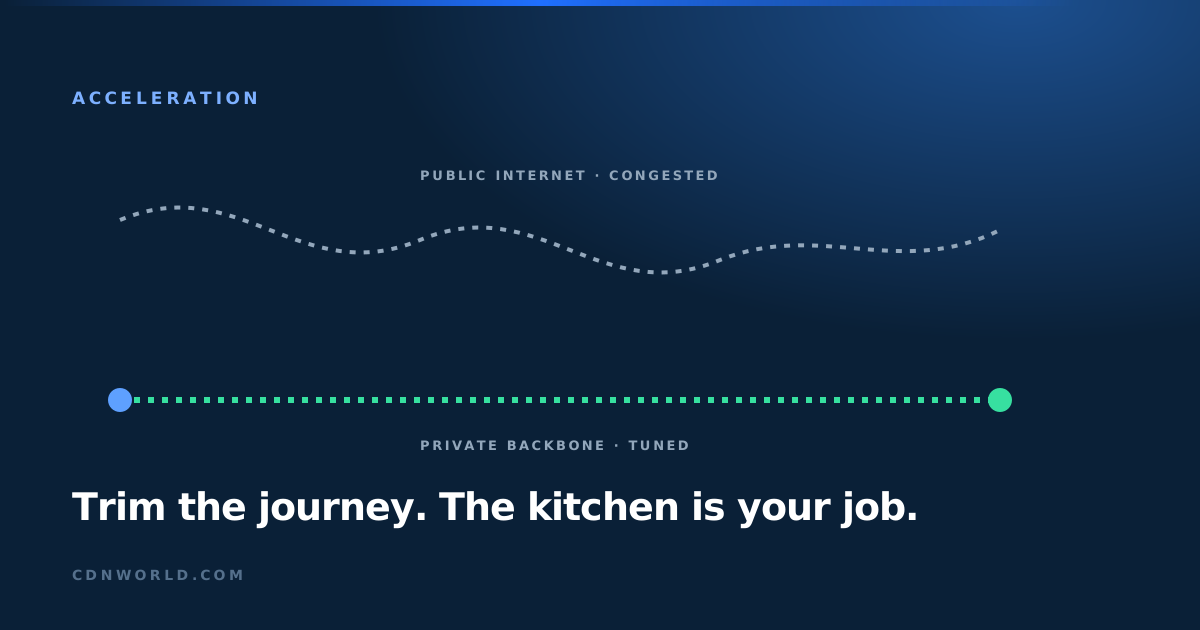
Connection optimization: users terminate TLS at a nearby edge on warm, tuned connections instead of trekking to origin cold. Route optimization: the middle mile travels the provider’s private backbone, dodging congested public paths. And partial caching: fragments, headers and API responses with even seconds of freshness get cached while the personalized remainder does not. The mysticism serves sales more than buyers: three specific mechanisms with measurable effects are easier to evaluate than one vague promise of speed.
What the tricks are worth
For genuinely uncacheable requests, the win is typically tens of milliseconds to low hundreds depending on distance and path quality, meaningful for APIs and interactive apps, invisible for a batch job. The further your users from origin, the larger the prize. Distance is the honest predictor of value: a user two hops from origin gains little from route optimization, while an intercontinental request routinely gains the low hundreds of milliseconds the brochures advertise.
Origin connection pooling deserves a concrete explanation, because it is where much of the dynamic win actually comes from. Without an edge layer, each distant user negotiates their own connection to your origin, paying full handshake costs across the whole distance. With it, users handshake with a nearby edge in milliseconds while the edge maintains warm, multiplexed, long-lived connections back to origin, amortizing the expensive setup across thousands of requests. The user experiences origin responses without origin distances, which is the whole trick stated plainly, and it applies to every uncacheable byte you serve.
What no CDN can fix
A slow database query arrives slowly through any network. Acceleration trims the journey, not the kitchen. If origin processing dominates your latency, spend there first, then let the edge amplify the improvement. The kitchen-versus-journey split is the most useful diagnostic sentence in performance work: time your origin processing separately from network transit, and spend where the larger number lives.
In practice
Instrument one representative API endpoint end to end: origin processing time versus total delivery time, per region. The gap between them is the theoretical maximum any acceleration product can win for you, and it converts every vendor conversation from adjectives to a ceiling you measured yourself. If the gap is small, invest in the origin first; if it is large and your users are far away, acceleration will show up in the field data within a week of the trial.
Our acceleration page shows the architecture in motion, and the assessment measures what it would earn on yours.