
We sell multi-CDN engagements, which is exactly why this article exists: the fastest way to lose credibility is recommending architecture to people whose problems do not require it.
The three justifying conditions
Outage cost: an hour of downtime costs enough to notice on a P&L. Geographic spread: revenue-bearing audiences in regions where no single network leads everywhere. Or negotiating position: primary spend large enough that leverage alone repays a standby minimum. Any one can justify it; none of them means hope. Credibility compounds the same way distrust does, one honest no at a time, and this page is where we bank ours.
The signals you are not there yet
Single-region audiences, tolerable outage economics, and delivery spend where a second minimum would be a rounding error in the wrong direction. In those cases a better single-provider deal, which is usually available, beats a worse two-provider architecture. The thresholds are deliberately expressed as conditions rather than sizes, because a small business with brutal outage economics can clear the bar while a large one with tolerant users does not.
A calibration note on outage cost, because teams estimate it badly in both directions. The honest number includes revenue during the outage, recovery drag afterwards, support surge, SLA payouts to your own customers, and the marketing spend that acquires back the users who left. It excludes the reputational catastrophizing that makes every outage feel existential. Most businesses that run the full calculation land somewhere unglamorous: real money, not ruin. That unglamorous number, annualized against realistic outage frequency, is what the second network’s minimum should be compared against, and the comparison is refreshingly undramatic.
The middle path
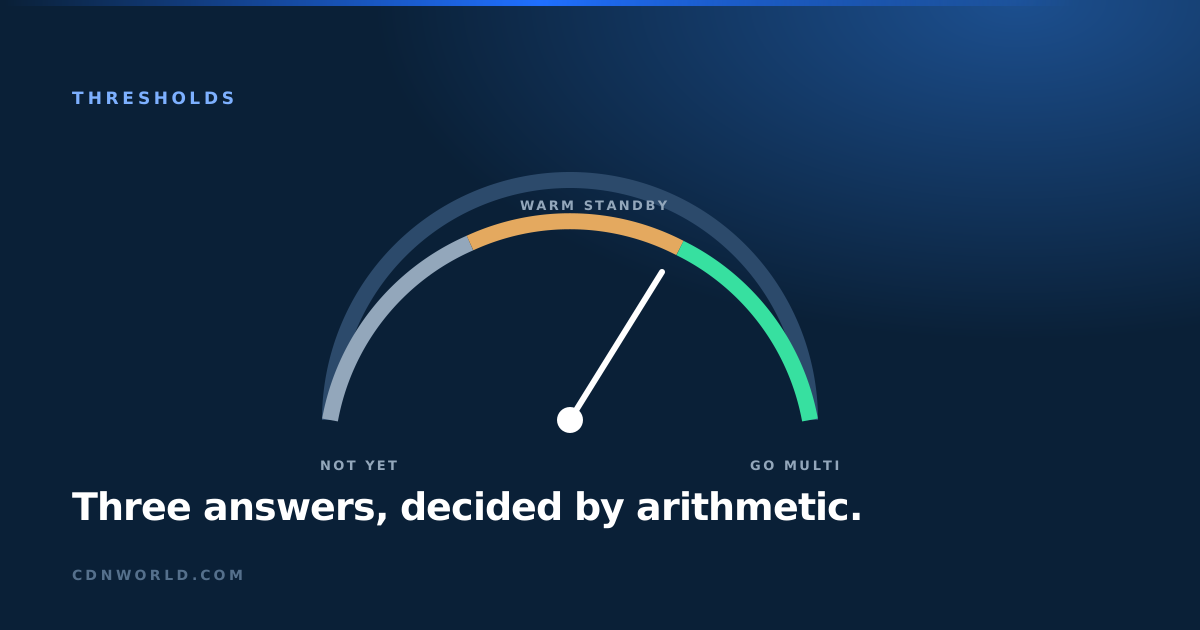
Warm standby: a second provider configured, tested quarterly, carrying minimal traffic at minimal commitment. Most of the insurance, a fraction of the complexity, and an easy upgrade path when the thresholds arrive. Warm standby also functions as a rehearsal space: teams learn the second platform, prove the failover and build the operational muscle before the stakes demand it.
In practice
Answer the three conditions in writing with numbers attached: outage cost per hour, revenue share in contested regions, primary spend at next renewal. One clear yes justifies the full architecture. All noes, take the better single-provider deal and revisit annually. Ambiguity in the middle is precisely what the warm-standby pattern was invented for, and it converts cleanly to full multi-CDN the quarter the numbers change.
Ask us and you will get one of three answers: yes, not yet, or warm standby, with the numbers that picked it.