
Core Web Vitals turned performance from an engineering preference into a ranking factor. The useful question for buyers: which of those graded milliseconds does the CDN layer actually own?
What the CDN controls directly
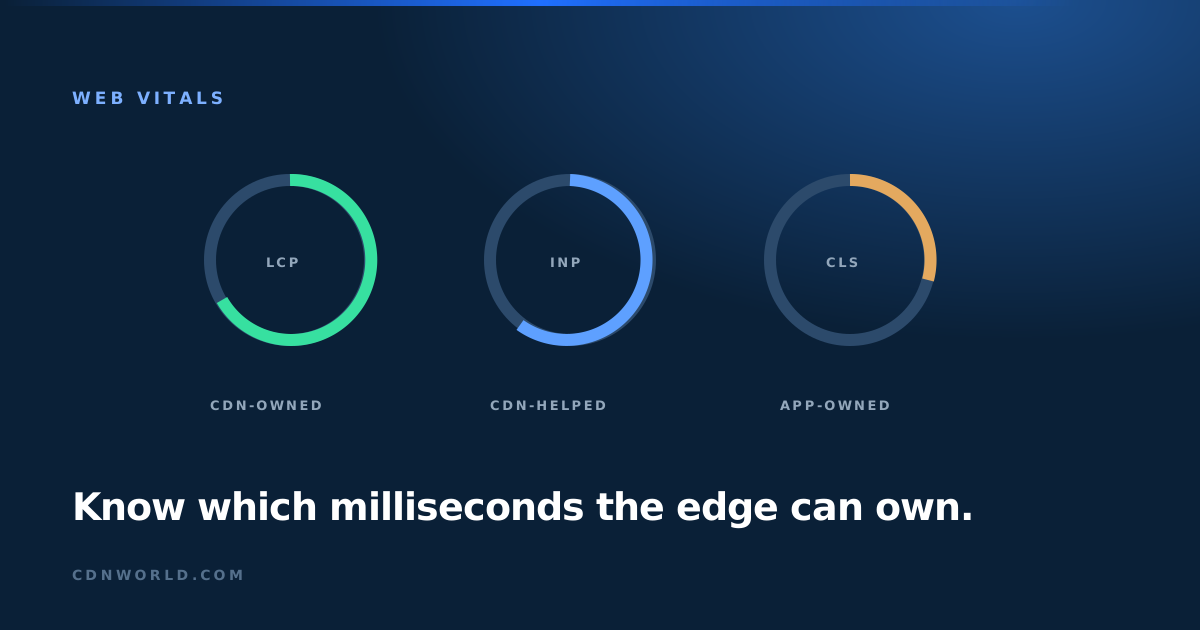
Time to first byte is the CDN’s home turf: edge proximity, connection reuse and cache hits decide it. Largest Contentful Paint inherits much of that, since the hero image or headline block usually travels through the same edge. Move TTFB and LCP follows. Ownership matters for accountability: when vitals miss targets, knowing which milliseconds belong to the edge and which to the application decides who spends the sprint fixing it.
What it influences indirectly
Interaction responsiveness and layout stability are mostly application work, but the edge contributes: HTTP/3 transport, early hints, compression and image optimization all trim the critical path. A CDN cannot fix slow JavaScript; it can stop the network from making it worse. The indirect layer is where CDN feature lists earn or waste their price: transport upgrades and edge optimization are valuable exactly in proportion to how bad the paths they fix are.
A warning about optimization theater: vitals respond to measurement pressure, and the industry has developed techniques that improve scores without improving experience, preloading tricks that game LCP, interaction deferrals that dodge responsiveness metrics. Google adjusts the metrics periodically precisely to devalue these, which means score-gaming is a treadmill while genuine delivery improvement is an asset. The CDN layer’s contribution, real bytes arriving sooner from nearer, is the durable kind: it survives every metric revision because it is the thing the metrics were built to approximate.
Measuring like Google does
Google grades field data at the 75th percentile, per origin. Judge your CDN the same way: real-user p75 by region, not lab runs from a fast machine on office wifi. Providers that improve your lab score but not your field score improved a number nobody ranks. The lab-field gap also runs in reverse: some CDN improvements barely move lab scores while transforming the field tail, because the lab never sat on a train in a tunnel.
In practice
Baseline your field p75 by region this week, before any procurement conversation, because the improvement story starts from wherever you actually are. Then attribute: TTFB and LCP to the delivery layer, interactivity to the application, and negotiate with the CDN only about the milliseconds it can actually own. Vendors respect buyers who arrive with the attribution already done; it shortens every subsequent claim.
Our engagements baseline field vitals before and after. The milliseconds either move or the report says they did not.