
Authoritative DNS providers compared as infrastructure — network shape, DDoS posture, steering ceilings, DNSSEC and the redundancy pattern every estate should run.
Winner depends on your workload.
Winner depends on: what sits above the record. For pure resolution, Cloudflare, Route 53 and the majors are all fast and absurdly cheap. The real differentiators are steering expressiveness (NS1's Filter Chains lead), estate fit (Route 53 inside AWS, Edge DNS inside Akamai), and blast-radius design — and the strongest answer for anything serious is two providers via primary/secondary, not a better one.
The layer with no fallback
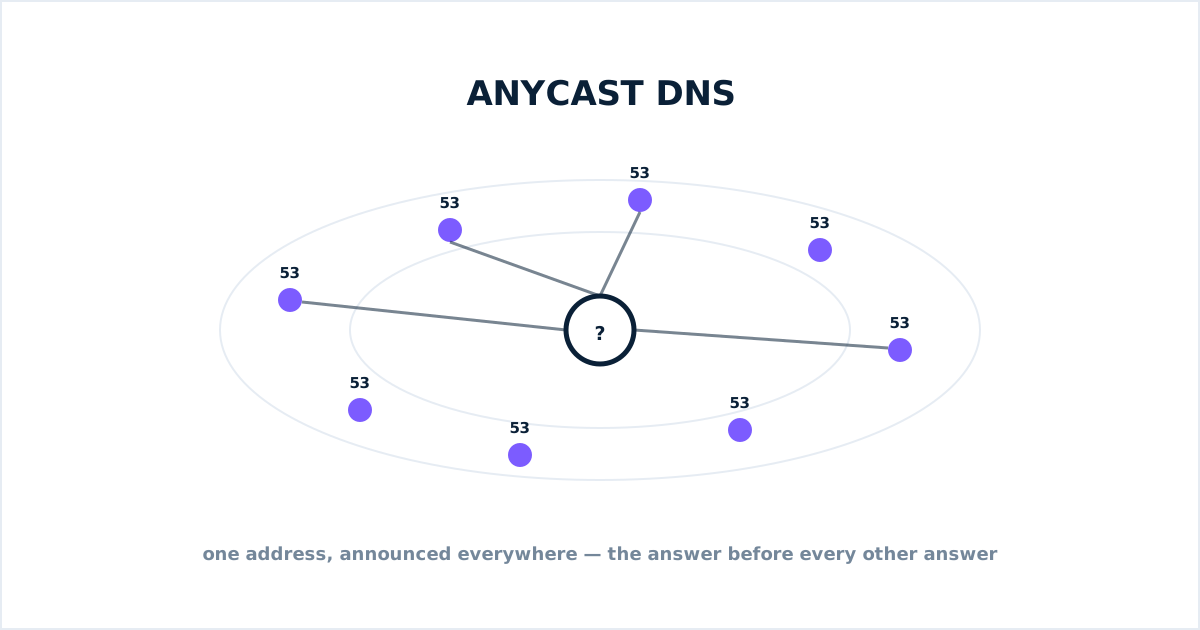
Every architecture diagram hides the same dependency at the top: before any CDN, origin or steering decision exists, an authoritative nameserver must answer. Anycast made that layer fast — the same IP announced from dozens of sites, queries landing at the nearest — and commoditized basic resolution to fractions of a cent. What did not commoditize: what happens under attack, how smart the answer can be, and what happens when the provider itself has a bad day, which the industry's history of DNS-provider outages made every operator's problem.
| Provider | Shape | What distinguishes it |
|---|---|---|
| Cloudflare DNS | Authoritative on one of the largest anycast networks; free on every plan | Speed and DDoS absorption as defaults; steering via its load balancing rather than a filter language |
| Amazon Route 53 | Anycast, deeply AWS-integrated; ~$0.50/zone and cents per million queries | Routing policies (weighted, latency, geo, failover) plus health checks; the default inside AWS estates |
| IBM NS1 Connect | 26-PoP anycast, 100% uptime SLA, optional dedicated networks | The steering ceiling: Filter Chains and Pulsar RUM, per the steering-layer roundup |
| Akamai Edge DNS | Authoritative DNS on the Akamai platform with GTM above it | Scale and hardening for Akamai-anchored estates |
| Azure DNS / Google Cloud DNS | Anycast authoritative inside each cloud | Estate-fit picks; steering thinner than the specialists |
| Independents (DNSimple, deSEC, Bunny DNS et al.) | Smaller anycast footprints, developer-friendly consoles | Excellent value for simple zones; verify DDoS posture matches your threat model |
Four axes that actually separate them
Resolution latency differences are real but small among the majors; buy on the axes that diverge. DDoS posture: authoritative DNS is a favorite volumetric target because success silences everything behind it — network capacity and per-PoP hardening matter more here than anywhere. Steering ceiling: a static A record needs nothing; a multi-CDN estate needs the decision machinery we compared separately, and providers cap out at very different logic. API and automation: zone changes belong in code review — Terraform parity is table stakes now, and providers still treating the API as an afterthought disqualify themselves. DNSSEC and operational hygiene: signing support, key rollover automation, and query-volume analytics are the difference between a provider and a toy.
The pattern that beats picking a winner
For any estate where DNS failure is unacceptable, the architecture answer outranks the vendor answer: run two providers, primary/secondary, with zone transfers (or synchronized-by-tooling zones where XFR is unsupported) keeping them identical, and both NS sets in the delegation. Resolvers retry across nameservers automatically, so a full provider outage degrades to added latency rather than absence — the cheapest availability upgrade in infrastructure, and the reason NS1, Route 53 and the independents all explicitly support secondary configurations. The complication to design around: advanced steering rarely transfers — Filter Chains and routing policies are provider-specific — so keep steered records with the smart provider and let the secondary carry a sane static fallback, the degradation you actually want under fire. The vendor-level comparison of the big three we keep referring buyers to is NS1 vs Route 53 vs Cloudflare DNS. Facts verified against provider documentation, July 2026.
Running one DNS provider and calling it redundant because it's anycast? The assessment designs the two-provider pattern for your zones.